


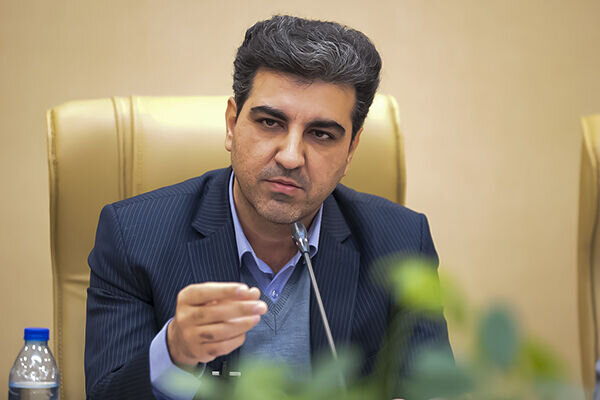
The Director General of Roads and Road Transport of Yazd Province, referring to the recent deadly accident on Yazd’s ring road, stated that this route—which is part of the Tehran–Bandar Abbas transit corridor—has lost its effectiveness as a highway due to high traffic volumes and multiple urban access points. He emphasized that constructing a circular and eastern bypass for Yazd has become an urgent necessity.
Seyed Mohammad Rastegari, in an interview with ISNA, highlighted several recent accidents on Yazd’s ring road, particularly the fatal collision on Monday, February 26, which involved multiple light and heavy vehicles and a fire, resulting in three deaths. He explained that this road is the province capital’s only ring road and part of the Tehran–Bandar Abbas transit corridor, but due to high traffic and additional urban access points, it no longer functions as a major highway.
Rastegari described parts of the ring road as functioning more like an urban street, noting that about 23,000 vehicles use it daily. Multiple entry and exit points occasionally reduce the service level to stop-and-go traffic, while unfamiliar drivers, assuming a 110 km/h highway, increase the risk of accidents. Several recent collisions were caused by this misunderstanding and driver inattention.
He stressed that the province has long called for a circular bypass and an eastern ring road for Yazd. With a 33% increase in traffic over the past three years, these projects are now considered essential for the province’s road and transport system.
Rastegari emphasized that the Tehran–Bandar Abbas corridor is the country’s busiest and most important transit route, and Yazd’s ring road cannot currently handle the traffic volume, which has severely reduced service and performance.
Referring to the national highway network, particularly neighboring provinces, he noted that surrounding provinces have invested heavily in freeway and highway development in recent years, raising concerns that Yazd might lose its central role in the country’s transport network. Therefore, provincial authorities must focus on improving service levels.
He added that provincial leadership has finalized the Yazd freeway project, one of the largest strategic infrastructure plans, and that the eastern bypass of Yazd is being pursued for funding under Article 23.
Rastegari called for speeding up the implementation of these strategic projects, emphasizing that road construction is not the Roads and Transport Organization’s responsibility, although road maintenance is. He stated that after years of asphalt deterioration on the ring road, nearly 800 billion rials in active contracts are currently being executed to repair the route.
He further noted that five work sites and a total of 1,700 billion rials in active contracts are underway in Yazd solely for the Tehran–Bandar Abbas corridor, from Naein in Isfahan Province to Anar in Kerman Province, with two sites within the Yazd ring road. The aim is to maintain Yazd’s central role in the country’s transport network by improving service levels.
Rastegari clarified that the Yazd freeway project is separate from the eastern ring road and cannot replace it.
Finally, he addressed rumors about the recent accident, stressing that no roadwork was underway at the time, the asphalt in the accident section had been previously repaired, and road conditions should not be blamed for the crash.

