


According to Mehr News Agency, about 30 days remain until the end of the year. Typically, as the holy month of Ramadan and Nowruz approach, the market experiences a renewed activity.
During Ramadan, the demand for essential goods rises, while during Nowruz, the fruit market sees increased activity.
Akbar Yavari, Chairman of the Board of the Union of Fruit Sellers, told Mehr that every year, people show greater demand for vegetables such as tomatoes, onions, and lettuce as Ramadan approaches.
He added that there are no supply problems in the fruit and vegetable market, and prices are determined based on supply and demand.
Referring to the daily inflow of fruits and vegetables into Tehran province, Yavari noted that between 14,000 to 15,000 tons of produce enter the wholesale market daily. With the start of Ramadan and reduced demand in the fruit market, products are stored for the Nowruz period.
The chairman emphasized that the inflow of goods increases during certain periods. For example, on Yalda Night this year, about 20,000 tons of fruits and vegetables entered the wholesale market due to higher demand for items such as watermelon and pomegranate. This number can reach up to 25,000 tons for the Nowruz market.
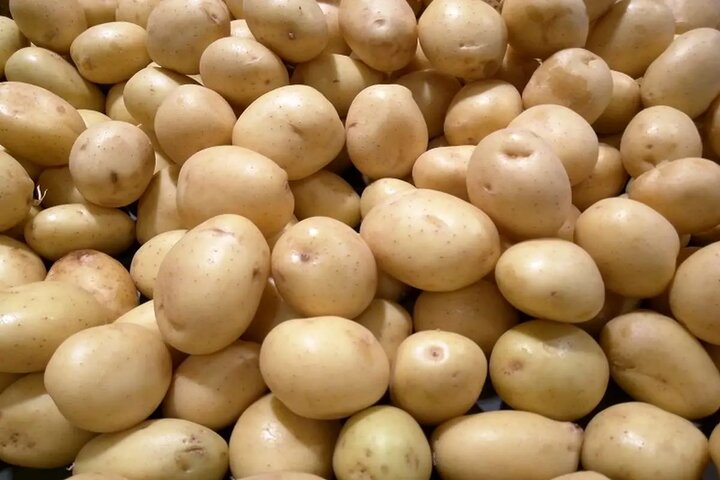
**Increase in per capita potato consumption in the country**
Yavari also addressed onion production, noting that this year’s cultivation exceeded market demand. Current exports cannot absorb this surplus, and the Ministry of Agriculture must plan accordingly. Without proper management, farmers’ motivation to produce will decline, potentially leading to onion shortages next year.
He stated that the country’s annual need for onions is between 17,000 and 18,000 tons, and exports must be managed carefully. Last year, unregulated potato exports caused domestic shortages.
Highlighting the high daily consumption of potatoes, onions, tomatoes, and cucumbers in the country, he explained that the annual potato demand is 5 million tons. In recent years, consumers of some essential goods like meat and rice have shifted their demand to potatoes.
The chairman concluded that per capita potato consumption has reached 40 kilograms, compared to 25 kilograms in other countries. After grains, potatoes are the second most consumed staple in the country and have become a substitute for animal proteins.

